Healthy "plankton blooms (populations of microscopic plants and
animals)," established early in the spring, can turn pond water a
green or brown color which will help inhibit the development of
rooted aquatic vegetation and filamentous algae.
If plankton blooms do not develop after repeated attempts, are not
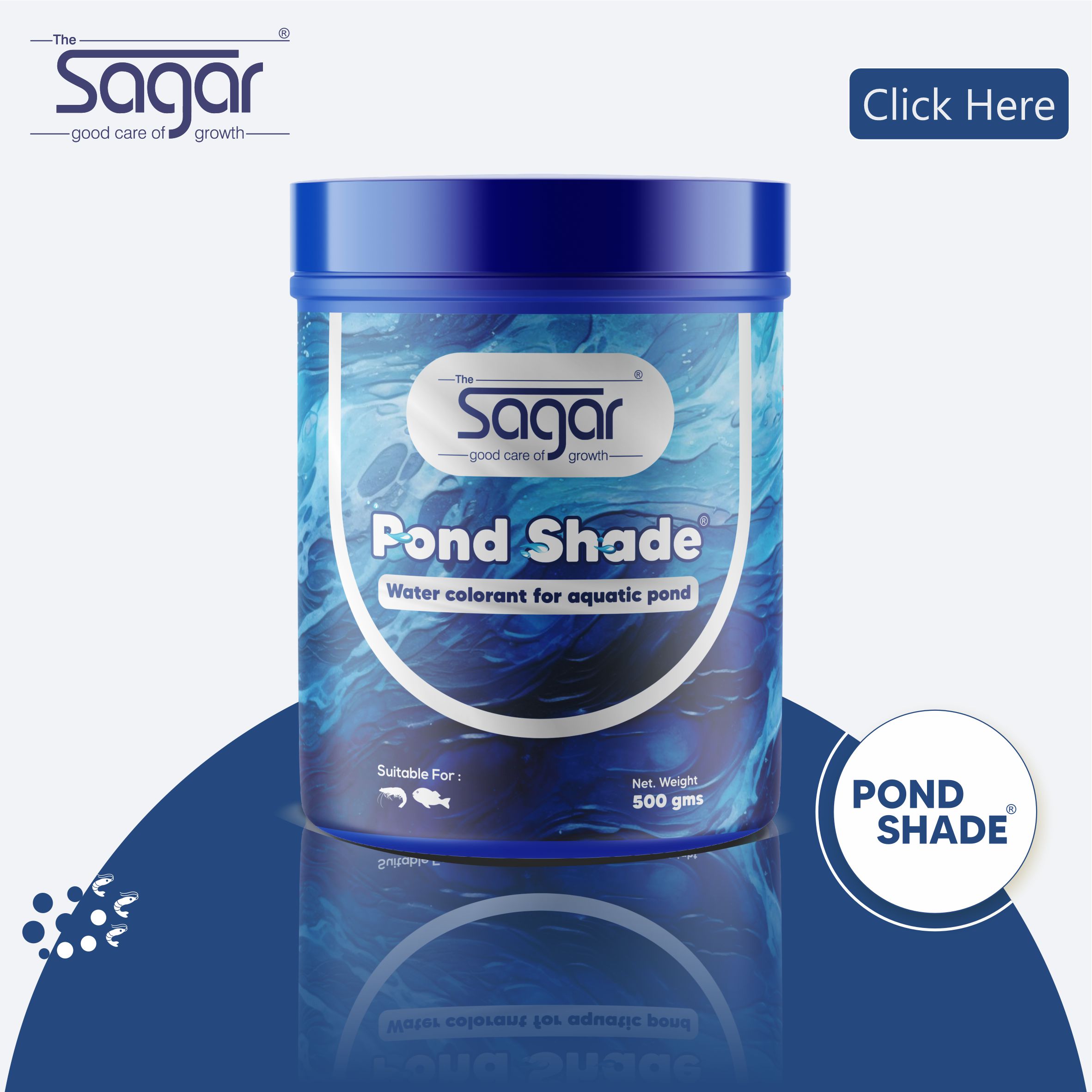
desired, or are not practical to produce; the use of PONDSHADE
may help prevent unwanted plant growth. PONDSHADE are used to
impart a blue or blue-green color to water when added to ponds.
PONDSHADE may also be added to decorative fountains, industrial
cooling towers, and industrial ponds which have little or no water
exchange. PONDSHADE are supposed to "shade" the aquatic
plants from sunlight while producing a more aesthetically pleasing
color. According to our research and constant trials in aquaculture
eco system, PONDSHADE reduce sunlight penetration into the
water column and reduce plant growth by inhibiting photosynthesis.
The dye consists of approximately 26% food dyes (acid blue, 23.63%
and acid yellow #23, 2.39%). This product is designed to screen the
red-orange and blue-violet light rays which the plants and algae
require for growth. PONDSHADE is applied from the container to the
pond's surface at the rate of 1 mg/l (1 ppm), of dye to 4 acre feet of
water.
As per the trials run at Sagar Biocare Pvt ltd. trial ponds, this
concentration should prevent the development of pondweeds,
chara, naiads, water milfoil, or filamentous and blue green algae. A 2
mg/l dye application is recommended to prevent Eurasian milfoil
and hydrilla in freshwater. PONDSHADE may also be added to
ponds during the summer in an effort to control established plant
growth. Dye treatments may remain effective for 4 weeks or longer